
🍔 Wellness Wednesday: Ultra-Processed Foods – What’s the Problem?
We hear a lot about ultra-processed foods (UPFs), but what actually makes them different, and why should we be mindful of how much we eat?
Ultra-processed foods are typically industrially manufactured products containing ingredients you wouldn’t commonly find in your kitchen, such as certain emulsifiers, flavour enhancers and artificial colours.
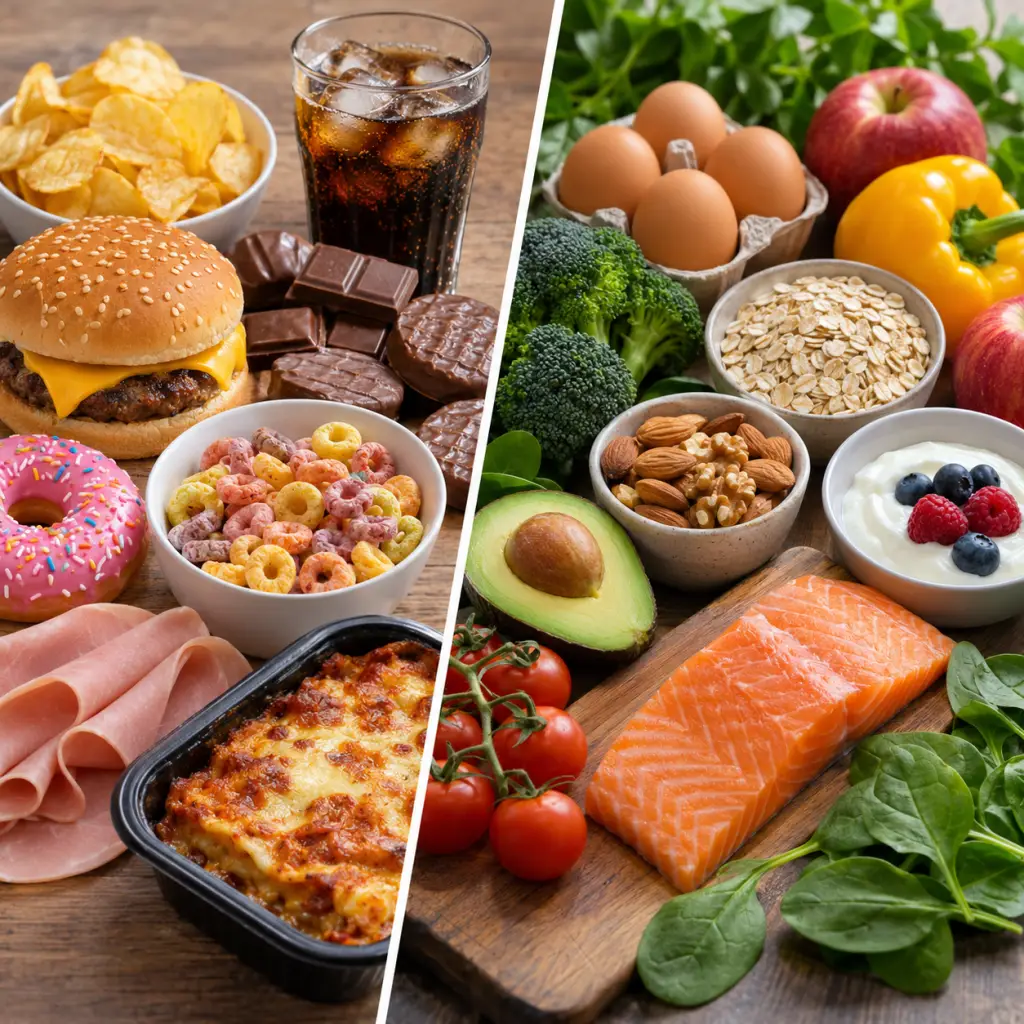
Common examples include some ready meals, packaged snacks, sugary cereals, fizzy drinks and processed meats.
So, what’s the problem?
🍫 Easy to overeat – Many are designed to be highly appealing, making it easier to consume more calories than we need.
📉 Lower nutritional value – Many contain less fibre and fewer essential nutrients than minimally processed alternatives.
🍬 High in sugar, salt and fat – Excessive consumption can contribute to various health problems.
❤️ Long-term health – Research has linked diets high in ultra-processed foods with an increased risk of obesity, type 2 diabetes and cardiovascular disease.
But not all processed foods are bad!
Frozen vegetables, tinned beans and plain yoghurt are all processed to some degree and can be excellent nutritional choices. Even some foods classified as ultra-processed can provide valuable nutrients.
What can we do about it?
🥦 Choose more whole and minimally processed foods.
🍳 Cook from scratch when possible.
🔍 Check food labels, paying attention to sugar, salt, saturated fat and fibre.
🍎 Swap some packaged snacks for fruit, nuts or natural yoghurt.
There’s no need to completely eliminate ultra-processed foods or feel guilty for enjoying them occasionally.
✨ It’s not about eating perfectly. It’s about making better choices more often.
Focus on what makes up the majority of your diet, rather than worrying about the occasional treat. 💚